

| Rising Utility Costs + Grid Uncertainty = Now’s the Time for Backup Power As we’re nearing the end of 2025, investing in backup power isn’t just a “nice‐to have” in case of an emergency, it is quickly becoming a strategic necessity. As utility costs continue to climb, grid reliability becomes more uncertain, and power demand is reaching record highs; having a generator is one of the smartest investments any business or homeowner can make. For generator dealers, these shifts signal one thing: a major increase in demand for reliable backup power and long-term service solutions. Utility costs are soaring in recent years Many regions in the U.S. are experiencing rising electricity prices. This is primarily driven by higher demand, infrastructure upgrades, climate and weather patterns, and shifting regulatory environments. At the same time, grid instability is no longer a hypothetical risk as outages, voltage excursions, and longer durations of power interruptions are becoming more common. |
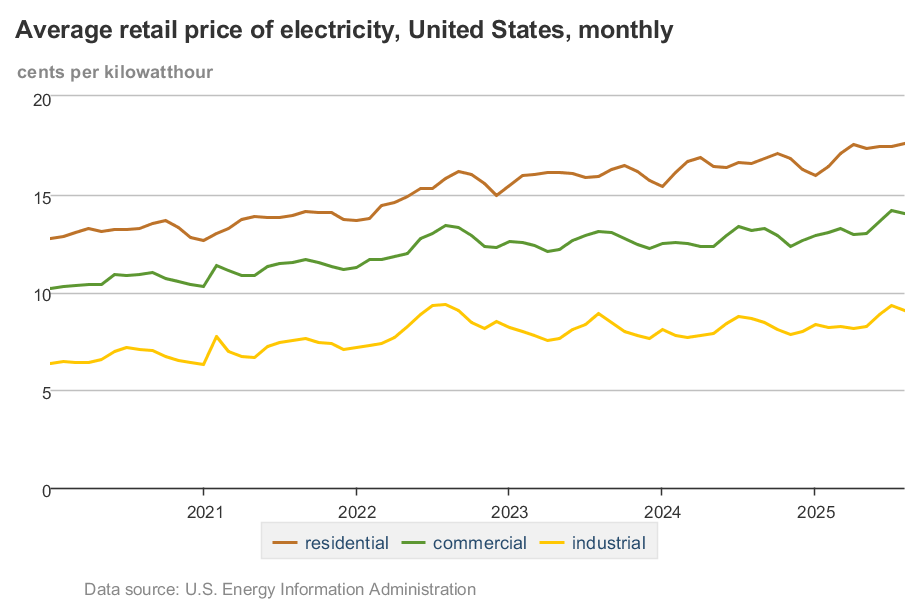
| According to the U.S. Energy Information Administration (EIA), average retail electricity prices have risen sharply since the beginning of COVID in 2020, especially residential rates. As a result, many homeowners and businesses are purchasing generators specifically to offset their utility costs by going on generator power during peak demand. It’s a win-win, because they also gain dependable emergency backup power. Higher power demand means more strain on the grid The EIA forecasted U.S. electricity consumption to increase in 2025 and forecasts it continue to increase in 2026, surpassing the previous record highs. Specifically, the EIA projected total consumption of around 4,187 billion kWh in 2025 and projects about 4,305 billion kWh in 2026, up from roughly 4,097 billion kWh in 2024 (source). As the world becomes more electrified and weather conditions continue to be more volatile, the need for power is only going to grow. |
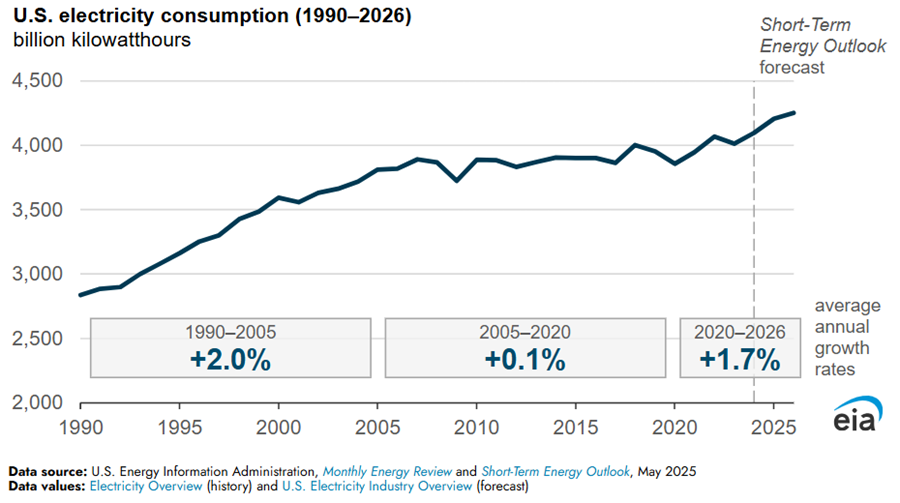
There is, however, a notable portion of electric consumption specifically from large-scale users like data centers. The data center industry is booming and the electricity to operate these facilities is immense. Most electric grids are not equipped with enough reserve power or capacity to handle normal demand—let alone the added load from new data centers. As a result, grid instability is expected to increase, leading to more interruptions, outages, and brownouts unless utilities can quickly expand capacity through new infrastructure, efficiencies, or renewable energy.
The data center effect and the AI boom
Large facilities like data centers, crypto miners, AI infrastructure, and digital operations are consuming even more electricity. These facilities don’t just add incremental load; they add high-density, always-on load that shifts how the grid must operate. In Texas alone, the Electric Reliability Council of Texas (ERCOT) had forecasted a 60% growth in electric consumption by large flexible load companies for 2025 since the year prior (source).
Companies like Amazon Web Services, Microsoft Azure, and Google Cloud are major data center operators, and each is expected to build dozens more worldwide between 2025 and 2030 according to ABI Research (source). And those are just the hyperscale facilities—additional growth from AI companies will put even more strain on the grid.
Then why invest in backup power?
Backup generators remain the most dependable form of emergency power available today. With rising outages and increasing electric costs, customers are no longer asking if they need backup power—they’re asking how soon they should install it.
For many businesses, the cost of downtime can exceed the price of a generator in a single event. Lost revenue, spoiled inventory, corrupted data, and operational shutdowns are real, quantifiable risks.
Monitoring has become critical
As generator usage increases, both during outages and for peak-demand savings, the importance of monitoring grows with it.
Monitoring helps:
• Reduce generator downtime
• Identify problems before they become failures
• Protect the customer from unexpected outages
• Increase reliability of high-value assets
• Give service teams real-time visibility into generator conditions
When customers invest thousands into backup power, monitoring becomes the logical next step to ensure maximum uptime and long-term performance.
Positioning Yourself for Success
As the grid faces increasing pressure and customers search for reliable solutions, generator dealers are in a strong position. Rising electricity costs, growing power demand, and the surge of data-driven industries all point to the same conclusion: backup power is no longer optional—and your customers are realizing it.
Dealers who educate their market, promote generator reliability, and offer monitoring as part of their strategy will have a powerful competitive advantage throughout 2026 and beyond.